
Patient Education
Start with the reason for hair change
Hair shedding, gradual thinning, a receding hairline and patchy changes can have different patterns and contributing factors. Photographs and online comparisons may help someone describe a concern, but they cannot establish the cause or determine transplant suitability. A consultation begins by understanding when the change started, whether it is progressing and what medical, family or treatment history may be relevant.
It is useful to bring a list of medicines, supplements and previous hair products or procedures. Mention scalp itching, scaling, discomfort, sudden shedding or recent illness. The clinician can then decide whether the next step is observation, hair or scalp care, further medical evaluation, or a discussion about restoration. No treatment should be selected only because it is popular or appears to suit another person.
Patient Education
When should you consider a hair consultation?
A consultation may be useful when hair fall feels different from your usual shedding, thinning becomes more visible, the hairline changes, or a previous treatment has not met expectations. People also seek advice before committing to a hair transplant so they can understand candidacy, limitations, recovery and alternatives.
Sudden or patchy hair loss, scalp inflammation or symptoms following a health change deserve professional attention rather than cosmetic assumptions. The assessment may indicate that a transplant discussion is premature or unsuitable. Seeking advice does not commit a patient to a procedure; it creates a structured way to review the concern and ask questions.
- Gradual thinning or increasing scalp visibility
- A receding or changing hairline
- Persistent shedding or a change in hair density
- Questions after previous hair treatment
- Planning before considering transplant surgery
Patient Education
Hair transplant versus hair treatment
A hair transplant moves suitable follicles from a donor area to selected recipient areas. It does not create unlimited new follicles, and it is not the correct answer for every type or stage of hair loss. Hair treatment is a broader term that may include scalp care, medical evaluation, lifestyle discussion and non-surgical planning based on the condition.
The two routes are not interchangeable. Some patients may first need the pattern to stabilise, an active scalp concern to be managed or expectations to be adjusted. Others may be candidates for a surgical discussion after donor supply, recipient area and long-term pattern are evaluated. Results, density, healing and timelines vary, so guaranteed regrowth or a fixed cosmetic outcome should not be promised.
Patient Education
What happens during scalp assessment?
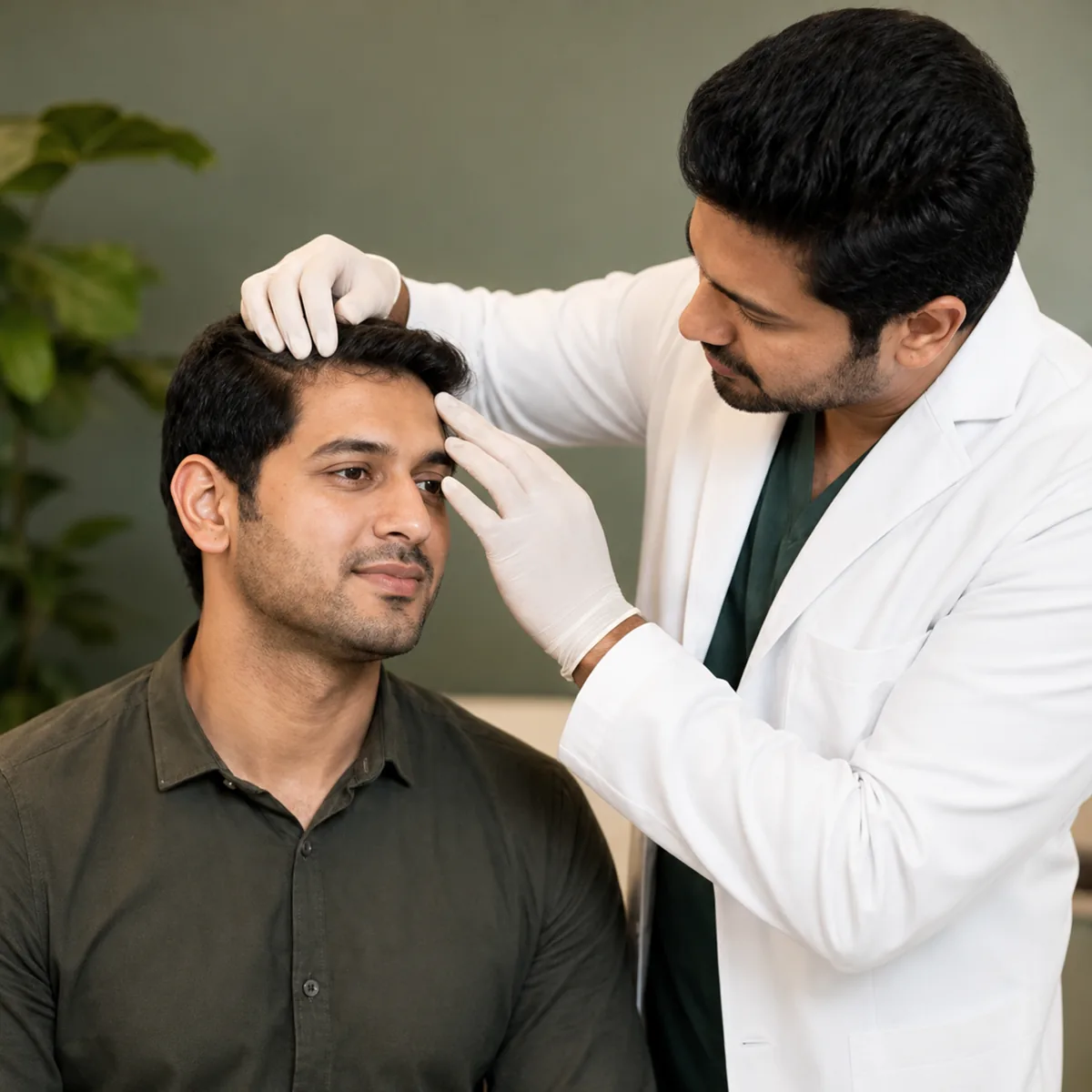
A scalp assessment may review hair distribution, density, hair calibre, visible scalp condition and the relationship between possible donor and recipient areas. The clinician may ask about family history, duration of hair loss, previous medicines or procedures, smoking, medical conditions and personal goals. Photographs may be used with consent to document a baseline and support planning.
The assessment is also a chance to identify questions that need another medical opinion or investigation. A visual review alone may not explain every type of hair loss. The aim is not to force a transplant decision, but to separate what is known from what still needs evaluation and to discuss a proportionate next step.
Patient Education
Who may be suitable for hair transplant consultation?
Adults concerned about a stable pattern of thinning, a receding hairline or selected areas of reduced density may request a transplant consultation. Actual suitability depends on the hair-loss pattern, donor availability, scalp health, medical history, healing factors, expectations and the likelihood of future change.
A person can be suitable for consultation but not suitable for surgery. Limited donor supply, an unstable pattern, active scalp problems, unrealistic density goals or health considerations may change the recommendation. Planning should consider how the result may look over time, not only the immediate area that concerns the patient today.
Patient Education
Steroid-free hair treatment approach
Shanti Dento Facial & Esthetic Centre follows a steroid-free hair treatment approach where suitable. That statement does not mean one standard plan is used for everyone. Recommendations depend on doctor consultation, the scalp and hair findings, medical history and the individual condition.
Patients should disclose products, injections or medicines used previously, particularly when the contents are unclear. Ask what is being recommended, why it is considered appropriate, what evidence or limitations apply and what changes should prompt review. Hair growth and response vary, and no consultation can guarantee regrowth, density or a specific timeline.
Patient Education
What patients near Wave City should know
The clinic is at B-004, Luxuria Estate, Aditya World City, NH-24 Ghaziabad, opposite Manipal Hospital and near Wave City. Patients from Bamheta, Shahpur Bamheta and the Ghaziabad 201002 area can confirm the consultation before travelling. Bringing a short timeline of hair changes and details of previous treatment can make the visit more focused.
Dr. Disha and Dr. Ishank are MDS Maxillofacial Surgeons with 11+ years of experience. The centre is available Saturday and Sunday from 10:00 AM to 7:00 PM. Call or WhatsApp in advance to confirm appointment timing and the appropriate clinician for the concern. This article provides general education and is not a diagnosis or individual treatment recommendation.